
Deciding Who Gets to Say Yes Cost of Higher Education Should Not Be the Deciding Factor

by Rev. Cara Stultz Costello, UMHEF President & CEO
The cost of a college education continues to rise. According to How America Pays for College 2026, a national study by Sallie and Ipsos, families spent an average of $34,019 on tuition, fees, housing, and other college expenses during the 2025/26 academic year. This is a 10% increase from the year before.
For many families, those numbers are not simply statistics. They shape real decisions about where a student can attend and how a family can afford it. 79% of families said they eliminated at least one college from consideration because of cost, while 47% borrowed to help pay for the education they ultimately chose.
Yet the picture is also hopeful. 91% of families see higher education as an investment in a student’s future, 80% are willing to stretch financially to secure the best opportunities, and 75% would rather borrow to pay for college than have their student miss the chance to attend.
The desire to learn remains strong. The belief that education matters remains strong. What has changed is how difficult it can be to make that possibility a reality.
This is where scholarships matter.
The 2026 report found that 61% of students received a scholarship, with an average cumulative award of $8,291. Scholarships covered 15% of reported college spending. Most strikingly, 76% of students who received scholarships said that scholarships enabled them to attend college.
A scholarship is more than help with a bill. It can reduce the amount a student needs to borrow. It can ease a family’s financial burden. It can make a particular school possible.
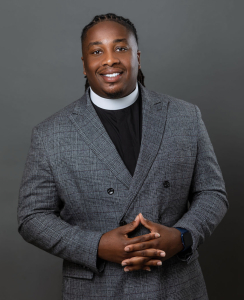 This is true for Don’Tavius Sanders, a United Methodist Higher Education Foundation scholarship recipient attending United Theological Seminary. “I know firsthand the sacrifices and challenges that come with pursuing higher education in this field,” he says about going into professional ministry. His UMHEF scholarship lifts the weight of financial burden, but that’s not all. “What you have given me is not just financial relief – it is the gift of possibility. It is the chance to keep dreaming, to keep pushing forward, and to grow into the leader, pastor, and servant I am called to be.”
John Wesley believed that faith should shape both heart and mind, and he saw learning as part of our growth in holiness and our capacity to serve others. We are formed not simply for ourselves, but for love of God and love of neighbor.
Higher education can be one of the places where that formation happens. It is where future pastors like Don’Tavius, as well as teachers, nurses, scientists, artists, counselors, and community leaders develop their gifts and discern how those gifts might become a vocation of service.
At UMHEF, we have the privilege of coming alongside United Methodist students at that important moment. Through scholarships and the generosity of our donors, we help make higher education at a United Methodist institution financially possible for people who are preparing to lead and serve.
That is more than financial assistance. It is an expression of our Wesleyan conviction that what we have is not ours to keep for ourselves. We receive so that we might give. We invest in one another because we believe that God’s work in the world is carried forward through people.
The cost of education may be rising. But so is our opportunity to invest in the people who will shape what comes next. Thank you for helping UMHEF make that possible.